

Kenya · Taita-Taveta County
Tsavo West National Park
A rugged volcanic wilderness of 9,065 km² gazetted in 1948. Home to the world's largest black rhino sanctuary, crystal-clear Mzima Springs, and dramatic Shetani lava flows — the mountainous counterpart to Tsavo East on the Nairobi–Mombasa corridor.
9,065 km²Park Area
200Black Rhinos
250M LMzima Daily Flow
6Main Gates
1948Established

World's Largest Rhino Sanctuary200 Eastern Black Rhinos roam 3,200 km² — expanded Dec 2025
Volcanic Geography & Landmarks
Tsavo West's rugged terrain rises from 600 to 1,800 m, shaped by the Chyulu Hills volcanic field. Paired with Tsavo East across the A109 highway, the two parks form the 22,000 km² Tsavo Conservation Area.
Shetani Lava Flows~200-year-old basaltic field; pahoehoe & aa patterns; feeds Mzima aquifer.
Mzima Springs250 million litres/day of glacially filtered freshwater; hippos & crocs.
Chaimu Crater~1865 cinder cone; 1 km trail; 78 m elevation gain; leopard & raptor vantage.
The Five SistersFive conjoined volcanic hills along a tectonic fracture; shapes herbivore routes.

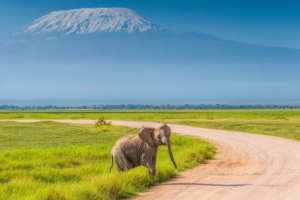
Ecological AnchorHerds graze in Tsavo West National Park.
Signature Wildlife
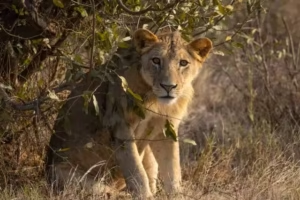
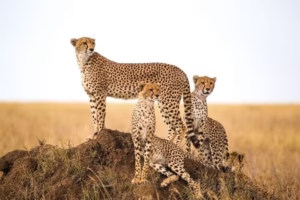
Eastern black rhinos tracked by LoRaWAN telemetry. Hippos at Mzima deposit nutrients that sustain the entire spring food web. Lions, leopards, cheetahs, and wild dogs patrol the acacia woodlands.

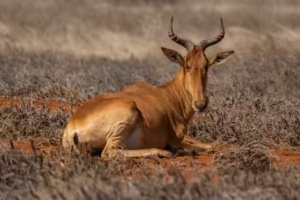
Waterhole WildlifeWaterhole at Serena Kilaguni
Getting There
Mtito Andei GateMain gate · A109 · 233 km from Nairobi · SGR Mtito Andei Station
Chyulu GateNW boundary · Amboseli–Tsavo road · Shetani Lava access
Tsavo River GateNE boundary · A109 near Manyani · Ngulia Rhino Sanctuary
Maktau GateSouth · Taveta–Voi road · LUMO Conservancy & Salt Lick Lodge
Ziwani GateWest · Taveta–Voi road · Voyager Ziwani & WWI sites
Lake Jipe GateSE · Tanzania border · Lake Jipe birdwatching & boating

On the GroundGame Drives · Walking Safaris · Night Drives
Park Entry Fees (24 hrs)
| Visitor Type | Adult | Child/Student |
|---|---|---|
| East African Citizen | KES 1,000 | KES 500 |
| Kenya Resident | KES 1,350 | KES 675 |
| African Citizen (Non-EAC) | USD 40 | USD 20 |
| Non-Resident (Int'l) | USD 80 | USD 40 |
Paid cashless via eCitizen "KWS Pay." Fees effective 1 Oct 2025. Tsavo West + Amboseli combo: USD 150 non-resident adult.
Health & Park Rules
- Malaria endemic — begin antimalarials 4–6 weeks before travel; use DEET repellent at dawn and dusk.
- Yellow Fever certificate required if arriving via Tanzania's Namanga or Taveta border crossings.
- Remain inside vehicles at all times; exit only at Mzima Springs boardwalk, Chaimu Crater, or marked picnic sites.
- Maintain 20 m minimum distance from all wildlife; never feed primates or baboons.
- In unfenced camps, never walk unescorted after dark — lions and hyenas roam freely through lodge grounds.
When to Visit
Dry Season
Jun–Oct & Jan–Feb. Wildlife concentrates at Mzima Springs and lodge waterholes; best rhino tracking conditions; hot and clear.
Wet Season
Mar–May "Long Rains," Nov–Dec "Short Rains." Lush volcanic scenery; dispersed wildlife; black cotton soils demand 4x4 with mud-terrain tyres.
Birding Peak
Nov–Apr. Palearctic migrants arrive from Europe and North Africa. Ngulia Ringing Station records thousands of warblers and flycatchers annually.