

Kenya · Narok County
Masai Mara National Reserve
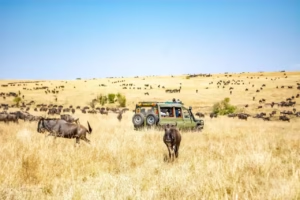
Kenya's most celebrated wildlife arena — 1,510 km² of undulating savannah at the northern tip of the Serengeti-Mara Ecosystem. Established 1961, upgraded to National Reserve 1974. Stage for the world's greatest wildlife spectacle: the annual Great Migration of 1.3 million wildebeest.
1,510 km²Reserve Area
+1,400 km²Private Conservancies
500+Bird Species
1,500–2,180 mElevation Range
1974National Reserve

The Great Migration1.3M Wildebeest · 250,000 Zebra · 400,000 Thomson's Gazelle — Jul to Oct
Geography & River Systems
Wide-open undulating savannah bounded to the west by the dramatic Oloololo Escarpment — the fault line of the Great Rift Valley — dropping to the fertile Mara Triangle below.
Mara RiverPrimary crossing artery; Nile crocodile ambush points at Governor's, Lookout & Purungat.
Talek RiverCentral boundary river; links eastern reserve to the open plains circuits.
Oloololo EscarpmentWestern fault wall; frames the Mara Triangle's exclusive wildlife corridor.
Musiara MarshNorth-central wetland; permanent resident lion prides & hippo pods year-round.

Apex PredatorsLion · Leopard · Cheetah · Wild Dog
Signature Wildlife
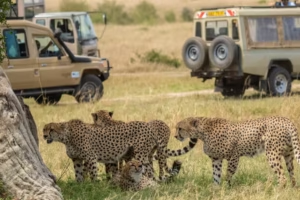
The Big Five roam freely across the open plains. Cheetah coalitions sprint across the short-grass corridors. Leopards stalk the riverine fig forests. Resident hippo pods hold the river bends year-round.

Iconic ExperienceHot Air Balloon Safari · Dawn Flights
Getting There — Gates & Access
Sekenani GateMain artery · C12 from Narok · Eastern & Keekorok sector
Talek GateCentral · Talek River boundary · Central plains properties
Oloolaimutia GateFar east · Hillside tented camps · Open plains circuits
Musiara GateNorth-central · Marsh country · Resident lion pride tracking
Oloololo GateMara Triangle · Escarpment road · Cashless Mara Conservancy
Purungat BridgeMara Triangle south · River crossing · Visa / M-Pesa payment

On the GroundGame Drives · Walking Safaris · Night Drives (Conservancies)
Park Entry Fees (12-hr ticket)
| Visitor Type | Low Season (Jan–Jun) | High Season (Jul–Dec) |
|---|---|---|
| Non-Resident Adult | USD 100 | USD 200 |
| Non-Resident Child (9–17) | USD 50 | USD 50 |
| Child (8 & Under) | Free | Free |
| Public Campsite | USD 40/night | USD 40/night |
| Balloon Landing Fee | USD 50 adult | USD 50 adult |
Tickets valid 12 hrs only (06:00–18:00). Departure-day ticket expires 10:00 AM. Paid via KAPS portal QR code — cash USD not accepted at primary gates.
Health & Park Rules
- Malaria high-risk zone — use prescription prophylaxis (Malarone or Doxycycline) plus 30–50% DEET repellent at ankles and wrists before dusk.
- Yellow Fever certificate required for cross-border coastal routing or arrivals from endemic entry points.
- No off-road driving inside the National Reserve — heavy fines enforced; off-road permitted only in private conservancies.
- Maintain 25 m minimum distance from all wildlife; cut engine immediately if animal shows distress.
- No spotlights, camera flashes, or loud calls during game drives; night drives restricted to private conservancies only.
- After dark, armed Maasai askari escort mandatory between tents and dining areas — never walk unescorted.
When to Visit
Great Migration (Peak)
Jul–Oct Long Dry Season. 1.3M wildebeest cross the Mara River. Thin vegetation, high predator activity, and dramatic river crossing spectacles at Governor's & Lookout points.
Calving & Big Cats
Jan–Feb Short Dry Season. Local calving season floods the plains with vulnerable newborns, triggering intense cheetah, lion, and leopard predator-prey activity across the central grasslands.
Birding & Green Season
Nov–Apr. 500+ species peak with Palearctic migrants — Steppe Eagles, European Rollers, Pallid Harriers. Short rains (Nov–Dec) bring lush skies; long rains (Mar–May) offer solitude and lower rates.